Blog

Showing posts with label Main Street. Show all posts

Thursday, November 13, 2008

Refocusing on Main Street: MerchantCircle in The New York Times

For politicians and the media, talking up Main Street is a much tougher pitch than talking up Wall Street. On Wall Street, you can see the valuations of companies rise and fall by millions in a day. On Main Street, it's much harder to gauge a new business opening or a store closing in, say, Pocatello, Idaho. As the economy dramatically began to shift downwards during the Presidential Election, the politicians finally began throwing around "Main Street" in their campaign speeches. It's a good thing too, since Main Street creates two-thirds of all new American jobs.

Well, the media started to come around as well, once Joe the Plumber became Mr. Main Street. Today, one of MerchantCircle's small business surveys on the financial crisis was featured in The New York Times:

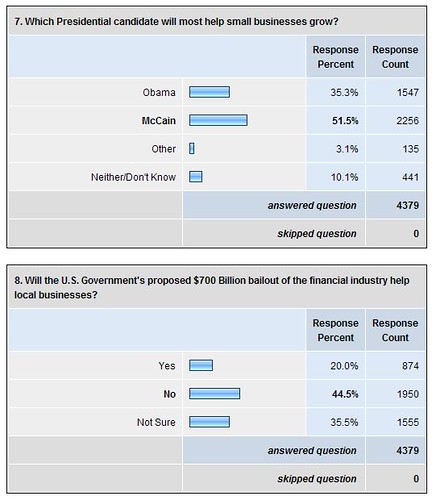
"In a survey in September of 4,200 small-business owners by MerchantCircle, a social networking Web site for small companies, four of five respondents said either that the federal bailout of financial institutions would not help them or that they were unsure whether it would.

At the same time, the election intensified scrutiny of Mr. Obama's tax plans. He has pledged to raise taxes on households earning more than $250,000. He has also pledged to create a $5 billion Small Business Rescue Plan, similar to the Treasury bailout, to be run through the Small Business Administration, as well as to scrap capital gains taxes on investments in small businesses and provide them with a small tax credit on their health care costs."
Click here to read the full article. Click here to see the survey results mentioned in the article.

Sincerely,
Kevin
Community Relations

Wednesday, October 29, 2008

How Many Business Owners Would Be Affected Under Obama's Plan?

As the economy becomes the focal point of this Presidential Election, Joe the Plumber is still making headlines all over the place. He has already decided to endorse Senator John McCain. We've previously written about how Joe Wurzelbacher might have trouble trying to buy the business from his employer, but even if he were able to, he would join less than 2% of business owners making more than $250,000. That's the threshold of increased taxation under Senator Barack Obama's plan. According to a CNNMoney.com Small Business story:

"....even using the broad definition of small business that McCain likes, very few owners would see their own taxes rise. That's because the lion's share of taxable income comes from a small number of wealthy businesses. Out of 34.7 million filers with business income on Schedules C, E or F, 479,000 filers fall into the top two brackets, according to an analysis of projected 2009 filings by the nonpartisan Tax Policy Center. The other 34.3 million - or 98.6% - would be unaffected by Obama's proposed rate hike."

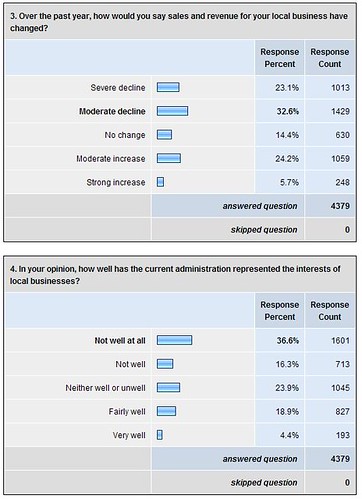
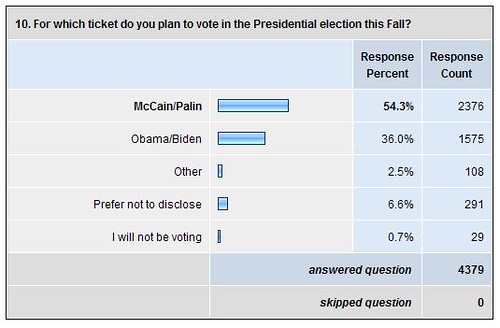
A recent Fortune/Zogby poll showed 45% of small business owners were 'worse off' than they were three years ago. This falls in line with our recent MerchantCircle poll showing more than 55% of business owners seeing a 'moderate' to 'severe' decline in sales and revenue over the last year. Even with those results under the current administration, many small business owners seem to have separated from blaming one party or the other. 54% of members surveyed said they would vote for Senator McCain, compared to 36% for Senator Obama.

Small Business owners around the nation also weighed in on CNN:

"I'd really love to see major change in the government. I don't think the problems are going to be solved in the next four to eight years, but at least we have to start somewhere."

Read what our small business owners are saying here.

In an article on Politico.com, the author argues that raising taxes under Obama's plan would mean less businesses would be interested in expanding, thus less new jobs produced.

"The economic law that 'taxing something more and getting less of it' would apply. Fewer Americans would be interested in opening or expanding small businesses. Tax evasion and legal tax avoidance would spike, as tax shelters would once again become a booming industry."
The argument on both sides for who will help out Main Street America the best, is nearing the home stretch. Less than six days remain until election day.

Sincerely,
Kevin
Community Relations

Friday, October 24, 2008

MerchantCircle Interview on The Wall Street Journal

Wall Street JournalAs the financial collapse has spread from Wall Street to Main Street and back, MerchantCircle's co-founder Ben Smith was interviewed in today's edition of The Wall Street Journal. The article titled, 'Venture Capital Financing Slows Amid Economic Downturn,' talks about venture-financed companies becoming more fiscally responsible and lean to survive the economic downturn.
Ben also wrote a post a few weeks ago on the MerchantCircle blog titled, 'How to Survive the Financial Downturn.'

Be sure to read both.

Sincerely,
Kevin
Community Relations

Tuesday, October 7, 2008

Presidential Election Survey Results: Small Business Owners Support McCain over Obama by a Large Margin

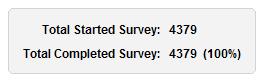
Total Even as new polls suggest Barack Obama is widening his lead over John McCain amongst likely voters, 53% to 45% supporting Obama according to the CNN/Opinion Research Corporation, small business owners surveyed in a MerchantCircle study overwhelmingly support McCain. The survey was conducted from September 25 to October 6 to over 4,300 small business owners in all 50 states. MerchantCircle is the largest online network of local business owners in the nation with 625,000 members.
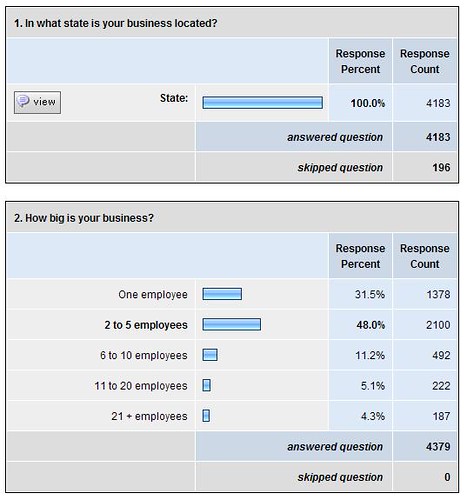
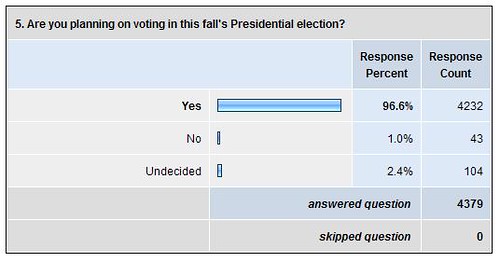
The surveys were conducted voluntarily from business owners via email. Over 96% of the responders intend to vote in November, although 10% are still unsure which candidate will help small businesses the most.

10 questions were asked, shown below:

Q 1 - 2

Q 3 - 4

Q 5

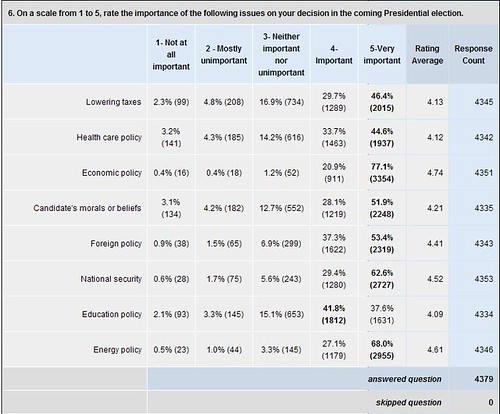
Q 6

Q 7 - 8

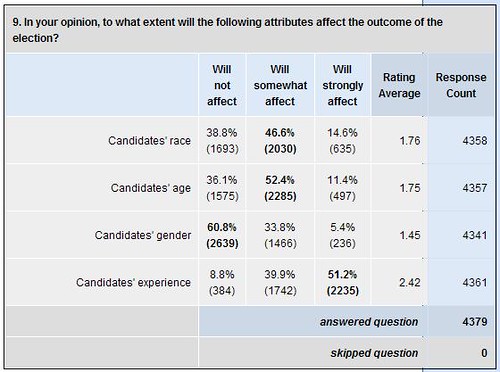
Q 9

Q 10

Here are some interesting stats from breaking down the results:

  • Of those (1602 surveyed) who rated that the current administration has represented the interests of local business as “not well at all”, 75.3% indicate they will vote for Obama, 8.7% McCain, 11% don’t know; and 4.9% other.
  • 55% have seen a “Severe” or “Moderate” decline in sales and revenue over the past year; 49.4% of McCain supporters versus 40% for Obama supporters.
  • McCain had the largest margin of support from businesses with 21+ employees – 64.7% to Obama’s 27.8%. Businesses that identified themselves as having one employee had the closest margin of difference – 47.9% indicated they would vote for McCain to 42% who would vote for Obama.

For individual state break downs, or special requests for specific data, please email Jennifer Roberts at Support@MerchantCircle.com.

Sincerely,
Kevin
Community Relations

Friday, October 3, 2008

Despite $700 Billion Bailout - 80% of Small Business Owners Still Not Convinced It Will Help

As we prepare Tuesday's official release of our Presidential Election Survey results, we're coming across a lot of discrepancies between the Government's message and what Main Street America believes. We also have an overwhelming response as to who Small Business Owners plan on voting for come November election time. Here's an excerpt of the release below:


MORE THAN 44% OF SMALL BUSINESS OWNERS SAY $700 BILLION DOLLAR FINANCIAL BAILOUT WILL NOT HELP THEM, AND 35% NOT SURE ACCORDING TO NEW STUDY

Despite White House and Congressional Efforts to Persuade Main Street America the Bailout is Needed, Nearly 80% of Small Business Owners Remain Unconvinced

Los Altos, CA October 3, 2008 – Only 20.1% of local business owners surveyed around the nation believe the U.S. Government’s proposed $700 billion bailout of the financial industry will help them, according to new survey results set to be released next Tuesday. The study was conducted from September 25 to October 1 by MerchantCircle, the largest social network of local business owners in the nation. The survey results came from over 4,200 responders in all 50 states. MerchantCircle has 625,000 members across the nation.

“I think what we’re seeing here is Washington not conveying their message to Main Street America,” says MerchantCircle Founder, Ben T. Smith, IV. “Nearly 45% say the bailout will not help them out, and 35% aren’t sure. To me, that means they view this bailout as only helping out Wall Street, with little effect on the economy around them. The focus should be on how Main Street America sees this bailout – and that’s not coming across.”


To read the complete release, click here.

Sincerely,
Kevin
Community Relations

Wednesday, October 1, 2008

Understanding the Bailout: How Politics is Underpromoting Main Street in Favor of Wall Street

Part 1:

As part of the largest and fastest growing network of local business owners in the nation, it's important that myself and the MerchantCircle team spend as much time as possible talking to the local business owners that make up who we are. In this defining moment of our economic history, almost all news stories have been focused around collapsing stock prices, epic bank failures, and $700 billion dollars worth of government bailout. Lost in the mix of financial terms and rhetoric, is what the $700 billion would've meant for the working man and woman, local business owners, and the next generation. Not one story has been written about what may happen to the employees of Washington Mutual, which was the largest U.S. bank failure in history, before being bought by JPMorgan Chase & Co. Regardless, many of the business owners I’ve spoken to still understand the consequences of inaction and the trickledown effect of a sputtering economy.

While in my home state of Alabama, I've spent the last few days meeting and learning what concerns business owners and their employees. I think Washington saw the rude awakening that was in store when they failed to properly gauge the viewpoints of everyday business owners. Some congressional leaders were bombarded with calls from their constituents at a clip of nearly 200 to 1 - against the $700 billion dollar bailout. The vote was 13 votes short of passing, with a final of 228 to 205. While it's still up for debate on whether the failed resolution will cause a complete collapse of the U.S. economy, the Dow Jones industrial average did sink 777 points because nothing was done. That’s about a $1.2 trillion drop in value of all the companies publicly traded on the Stock Exchange – hurting many with a pension or 401K plan.

In theory, the $700 billion dollar bailout would've kept banks open to small business owners in the form of mortgage loans, business loans and other consumer borrowing. In recent weeks, banks and firms had stopped loaning to each other as depreciating home values and foreclosures wiped out the possible pool of money available to loan to small businesses. The bailout would have allowed the government to purchase troubled assets from these financial institutions, which, in theory, would allow banks to regain confidence in lending.

It doesn't help financial institutions when customers withdraw money in droves. For every one dollar that comes out of a bank, that's essentially 12 less dollars in the U.S. money supply. Which is essentially the reason behind the collapse of Washington Mutual. This may also have an adverse affect all across the board, which is why the government feels it needs to step in immediately. If the banks stop lending money, then everyone will be broke and stop buying things. If people stop buying things, every company will lose revenue, which could then lead to job cuts and a deeper recession.

Much of what the government overlooked was how the rest of the nation would see this resolution. The way that it was reported, made the bailout seem like this would rescue big institutions, when for years, many small business owners have been struggling with no intervention from the government. The bailout would have done little around directly helping out those whose are in danger of losing their homes and facing foreclosures. To put the $700 billion in context, there’s about 25 million estimated small business owners in the nation according the U.S. Census. If the government were to distribute that bailout money amongst the nation’s business owners, that’s about $28,000 for every merchant to try and grow their business and the economy. Distributed equally between the nation’s 300 million people? That equates to about $2,300 a person.

While speaking to businesses such as Pink Pony in Gulf Shores, AL, Paradise Marine, Sportsman's Marine in Fairhope, AL; Bay Breeze, The Charter Boat MAR-T on Dauphin Island, and Julwin’s Restaurant in Fairhope, AL amongst others the last few days, I learned that many of them have cut their work force in half over the last few years. With a loss in sales, these business owners saw the bailout as necessary to stave off further economic disaster from future bank failures. It’s the masses who shop on Main Street who see the bailout as using tax payer dollars to help out the upper crust of Wall Street. There is no way the bailout will not cause outrage from everyday citizens, especially when so little is advertised for those who are struggling. If a new resolution hopes to pass, it would be better served if the White House and Congress spoke directly to Main Street consumers about how this resolution is helping them out directly and not just bailing out the “greed” in Wall Street. Many in local communities spend little time checking the Dow Jones industrial average, as they worry about problems that are closer to home and economic conditions that have forced them to lay off their employees and find new methods towards acquiring new customers.

This bailout is critical to local business owners, but the positioning towards Main Street America is wrong. Small business owners I’ve spoken to have expressed to me that the nation needs a working bank system for running their business and consumers need to have credit. This bailout cannot ONLY be seen as bailing out Wall Street. The consequences must be seen on a more ‘local’ level. Often times, the most vocal constituents are the ones who disagree with something. Many of the business owners and employees I spoke to did not know how to go about reaching their local representatives or even if they would listen. Well, with the failed bailout, it’s obvious, many representatives listened to their constituents. It’s time YOU voiced your opinion as well – for a list of contact information you can click here to find a link. When the next bailout proposal hits, let your congressman know how you feel.

Sincerely,
Ben T. Smith
Co-Founder and Chairman, MerchantCircle

In next week's Part 2: read about what you should do as a business owner and how you can protect yourself.